
Tag: genealogy

52Ancestors Wing Family

Emma M. Place’s divorce from William H. Wing

One of the prompts in the #52Ancestors challenge had to do with “courting.” Partakers were given the ability to decide what form of “courting” they wanted to look on, whether it be court documents and the like or romantic courting. I decided to hit a bit of a middle road: courting when post-courting goes array.

One of my 3rd great-grandmothers up my maternal line is a fantastic example of this myth that many of us modern day folk have bought into for a long time. When you bring up the concept of divorce in American culture, many make the mistake of thinking that this is a relatively new thing. For sure, divorce rates have climbed since the 1980s, but divorce is something that happen pretty regularly even in the early 1900s.

Emma Place (1859 – 1926), daughter of Abraham Place and Julia Light, had three husbands during her 67 years here on earth. The first one, Jame O. Higgins, died sometime between their daughter’s birth in 1886 and Emma’s second marriage in 1892. Emma’s second husband – so my 3rd-step-great-grandfather, but also my 1st cousin 4 times removed – was William Henry Wing (1856 – 1936), son of George Washington Wing and Nancy Canwell.

Marrige certificate for William H Wing and Emma M (Place) Higgins from the Maine, US, Marriage Records, 1713 – 1922 for Androscoggin County.

Unfortunately for these two widowed and remarried people, things did not seem to go well. After only 9 years of living together, Emma moved out of the home she shared with William. Two years after, she petitioned for divorce.

Image copy of the petition of divorce that Emma Place requested regarding her marriage to William H. Wing.

Below is a copy of the above image:

In a plea of libel for divorce in which the librelant respectfully represents that her maiden name was Emma M. Place, that she was legally married to the said William H. Wing at Leeds in the county of Androscoggin on the 29th day of April AD 1893 [1892] by Henry M. Browsby Esp a Justice of the Peace; That they lived together as husband and wife at said Leeds from the time of this said marriage until April 10 1901; That your librelant has always conducted herself towards her said husband as a faithful true and affectionate wife; That on the 10th day of May 1900 and at other times between said 10th day of May and the present time he has been guilty of adultery; That he bring of sufficient ability or bring able to labor and provide for her, grossly or wantedly and cruelly refuses or neglects to provide suitable maintenance for her; That he has gross and confirmed habits of intoxication from the use of intoxicating liquors; That he during the time they lived as man and wife was guilty of cruel and abusive treatment to your librelant; That there is no collusion between your librelant and the said William H. Wing to obtain a divorce; that your librelant believes it reasonable and proper, conducive for domestic harmony, and consistent with the peace and morality of society that the bonds of matrimony between her and her said husband should be dissolved by divorce, Wherefore she prays that such divorce may be decreed.

Dixfield Febry 12 1903

Emma M. Wing

In summary, William H. Wing was not a fantastic specimen of a husband. From what Emma states, he refused to work, had an affair multiple times, was constantly drunk, and abused her. Thankfully for Emma, her divorce was agreed to by a judge in October of 1903.

Copy of the divorce records from Andrscoggin County, Maine, 1903.

Emma was granted her divorce from William on the charges of cruel and abusive treatment.

All was not lost, though, for in 1905 Emma married her third husband, James Monroe Haynes (1856) and remained with him until his death in 1915. After that, she lived with her son John and later became caretaker of her grandson, Leo D. Wing, son of Carrie Higgins Wing, until Emma’s death in 1926.


This is just one or hundreds of divorces that took place in Maine during the late 1800s and early 1900s. Scanned records of divorces from 1892 to 1963 can be found at the Digital Maine Repository. Some indexed records from 1799 to 1908 can be found at Maine Divorce Records via Maine Genealogy.


As a fun little “bonus” piece to this spiel about Emma Place and her divorce from William H Wing, I’m going to include the following, very rough, concept map of the connections between Emma, her second husband, third husband, daughter, and son-in-law. It’s an interesting map and will probably show up in another post that I’m working on regarding Carrie Higgins, Emma’s daughter.

I’ve placed Emma in pink so that it’s easier to find her and trace around the map to the other people. It seems that Emma was destined to have some connection with the Wing family, one way or another.


This blog post is done in part for Amy Johnson Crow’s #52Ancestors challenge. To learn more, visit https://www.amyjohnsoncrow.com/52-ancestors-in-52-weeks/.

52Ancestors Maine Places

The Search for Julia – Part III

As I’ve shared in The Search of Julia and The Search for Julia – Part II, I’m on the hunt to find one of my 3rd great-grandmothers. She has been a brick wall in my research for a while now, and I figure sharing some of the tactics I use to try to scour out a loose brick to get past this obstacle might help others.

Thankfully, the #52Ancestors challenge has been lending itself well to this.

This post’s prompt is all about maps. Maps are something that many people tend to over look, especially as they can be few and far between in many time periods. One wonderful bonus about living in Maine, however, are the maps at the Library of Congress’ website. In the late 1850s and early 1860s, each county in Maine had a topographical map produced from survey data. Obviously, these maps aren’t necessarily without faults, but they give a great insight as to the people who lived in the towns and counties at the time.

One of the next steps for hunting down the possibly families of Julia Light will be a reverse crawl from these maps.

Given that most of Julia’s married, and most likely pre-married, life took place in Patrickstown Plantation, later known as Somerville, I started by finding the map for the town, in Somerset county.

Map of Somerset County, Maine, circa 1857.

By zooming into these maps through the Library of Congress’ interface, I can legibly read the names of the heads of households for the dwellings. This map is from 1857, a long ways after Julia Light was born in 1820, but the names on these maps can certainly give a few potential leads. By looking at anyone with the shared surname of Light living in any of the potential areas in which Julia was born or lived, I can begin crawling back up family trees to see potential connections. While I might not find a direct relation, sometimes even finding a first or second cousin can help lend light on the potential paternal family.

For example, in Washington, the town next door to Patrickstown Plantation, there are at least three homesteads with the surname of Light. These could be brothers, cousins, or uncles of Julia Light. If I can track these names down in the census data and then create a family tree for them going back two to three generations, this might generate some leads. (We all know that in a perfect world census data would be digitized without issue, but that world just doesn’t exist. These maps can give genealogists an idea as to what might be hiding in the census records that weren’t digitized correctly, or families that moved in and out between census records.)

For towns and cities that are more densely packed, the Library of Congress also has Sanborn Fire Insurance Maps that might be able to shed light in the search as well. Unfortunately, areas like plantations out in the middle of Maine aren’t really seen as needing insurance mapping during the time period that those maps were created.


This blog post is done in part for Amy Johnson Crow’s #52Ancestors challenge. To learn more, visit https://www.amyjohnsoncrow.com/52-ancestors-in-52-weeks/.

52Ancestors

The Search For Julia – Part II

(I promise, no cheesy shoe metaphors this time!)

So, as I shared in The Search For Julia, one of the projects I’m currently working on is trying to track down the lineage of my 3rd great-grandmother, Julia Light.

Julia was born in 1819/20 somewhere in Maine. Unfortunately, I have yet to find a copy of the marriage record for when she married Abraham Place, so no information can be garnered there. Also, I am having a field day of a time trying to find vital records for the town that she was married in prior to 1855, and given that she was born in 1819/20, there’s a good chance Julia was married sometime in the late 1840s.

To make things more interesting, the US Census information for the era in which Julia was born isn’t always as helpful as it could be.

Prior to 1850, the US Census only recorded heads of household, typically men, and no other names. (Every now and again a widow, single mother, or spinster would show up on the census, but sometimes even these names would be erased from history and the eldest white male would be names head of household instead of the true, female head of household.)

In order to find someone born in 1819/20 of which the parents are unknown, there is a long process involving census records – especially in Julia’s case as I have yet to find a birth certificate either. This process is where the 52 Ancestor prompt comes into play. When people mention “Branching Out” in genealogy, many thing of going out onto the branches of the family tree, to cousins, aunts, uncles, etc. My mind tends to take that one step farther and I find myself branching into communities, states, and regions.

With Julia, this is the path I took: I decided to start branching out into the state as a whole, knowing that the population of Maine at the time of her birth wasn’t that far spread. Taking her estimated age of birth from the 1850s census records, I began looking at households where she would have lived as a teenager. I look through the 1830s census records for entries of young females “of 10 and under 15” years of age.

It needs to be noted that I don’t look at just the census listings for the town that Julia later resided in, Patrickstown Plantation (later known as Somerville), but across the state, as I can find no solid information placing her birth in Patrickstown Plantation. I look at all census records with the same last surname and others that could be a misspelling of the surname. To me, this is like looking up into the canopy of the woods and trying to find the branches of a specific tree. There are so many inter-crossing branches that it’s hard to trace, unless you can take a picture of just those branches and work to trace them back to the trunk.

I gather together the information into a well designed mockery of the actual 1830 census forms.

This allows me to do two things: 1) I can have a better idea as to whether Julia was born in Maine – after all, if I find no families with the same name, then there’s a good chance she was born elsewhere. – and 2) I can more easily find the families that Julia may have been a part of.

Once I can see the families with a young female of the right age, I can then look at the 1840 census data and compare to see which of these young ladies are no longed part of the family. Given that Julia’s oldest child was born in 1837, she would most likely not be living with her parents.

The step after that? Tracing each branch of the same species of tree back to see if I can find the trunk. I’ll be looking at each individual head of household with a young female of the right age listed in the 1830 census but gone in the 1840 census. The hope is that one of these branches will lead to the “trunk,” to the family that Julia was born into.


This blog post is done in part for Amy Johnson Crow’s #52Ancestors challenge. To learn more, visit https://www.amyjohnsoncrow.com/52-ancestors-in-52-weeks/.

52Ancestors

The Search For Julia Light

Have you ever lost something? Like a book or a shoe, and no matter how long you look for it, you just can’t find it? Then, one day, as if by magic or the Universe clicking into place, it miraculously shows up. You should feel a huge sign of a relief that you finally found your shoe, right?

But, no. Instead there is a sudden flood of questions that start collecting in the brain, making it impossible to think of anything else except the lost shoe, now found.

How did you lose the shoe in the first place?
Did the kids take it? The dog?
(When did you even buy these shoes?! They look like something 1980 threw up.)
Why would you not put it where it was supposed to be – on the boot rack with all the others shoes?
And why – and perhaps most perplexing – WHY did it end up in the freezer?

Genealogy can be a lot like a constant game of misplacing and finding items that you lose in your own home. You know somewhere, under the couch or in a lost census file in the middle of the state library, that you will find your answer, just who knows when.

Searching for my 3rd great-grandmother, Julia Light, has been a bit like trying to find that lost shoe.

(Now, before anyone starts shaking their heads or waving fingers in my direction, no, I’m not saying these lives are as “worthless” as an inanimate object, but in order to truly hunt down information objectively my brain treats a subject, in this case Julia, in a similar mindset as a shoe. Once I have a firm grip on the object, or person, from just an information standpoint, than I start looking at them as more of a historical figure to study, and then as a family member who has a story to be told….but all that can be expanded on in another post.)

(Take from Ancestry.com)


When I first started tracing my family tree, I kept finding a lot of holes up one line. That family has had a lot of broken twigs from alcoholism and multiple, nasty divorces, which has made tracing anything an interesting feat. When I finally got back to Julia, I ran into some basic information that was all supposition, except her marriage to Abraham (Abram) Place. Unfortunately, much else was hard to come by, especially since Julia was only found with Abraham in the 1840 and 1850 census records. I had no idea who Julia’s parents were and was having a heck of a time piecing out any information about her. It was like she had only left a footprint – or shoe print – and disappeared.

So, as you do with the shoe you can’t find, you eventually have to give up looking for it for a while. After all, the cats need dinner, cord wood needs stacking, and for some odd reason your chickens think you’re outside only to serve them.

Next thing you know, it’s been over a year and you finally remember about that blasted shoe that you just can’t find. You try looking for it again and BOOM! There it is! Behind the freezer burned gelato from last Yuletide and the left over turkey carcass you keep saying you’ll make into stock.

When I started researching Julia Light again, only a day or two ago, the pieces starting fitting into place, but the more I found, the more curious I became.

Because of when Julia was born, 1820 +/- a year, she won’t be listed in the 1830 census by name. So far I have two possible families that she could be in and will extrapolate on those at a later date. On the same vein, because of the lack of names aside from “head of household” in the 1840’s census, I can only place her in with Abraham Place due to the age bracket checkmarks.

This, for me, is where things get interesting and where my curiosity gets peaked.

In the 1850 census, Julia is listed with Abraham and 7 of their children.

  • Abraham/Abram Place – 39 – M – Farmer
  • Julia Ann Place – 30 – F – Keeping House
  • Abram Jr – 13 – M
  • Isaac – 9 – M
  • Gennett – 7 – F
  • Ann – 6 – F
  • Elisabeth – 4 – F
  • Rose – 2 – F
  • Jacob – 4/12 – M

They are living in Patricktown Plantation, Maine, and are doing the normal farming life that so many others in the town live by. But then, in the 1860 census, there’s only this for a listing:

  • Abraham/Abram Place – 48 – M – Farmer
  • Abram Place – 23 – Farmer
  • Rose – 12
  • Jacob – 9
  • Lucy – 7

Julia Light seems to just disappear from the picture. All her older children are scattered, which makes sense, but she and her youngest (Maria, born in 1857) have disappeared.

Initially, my instinct would have been to assume she passed away and someone else in the family had the baby with them. Whatever happened went down right around the time of the census for 1860 as I can trace all the other children that had left, but can find nothing regarding baby Maria and Julia.

That is, until the 1880 census mortality schedules, which is where I find the following:

ENTRY #8
Name of the deceased person: Place, Julia
Age: 65
Sex: F
Color: W
“Civil condition”: Widowed/Divorced
Born: Maine
Mother born: Maine
Father born: M
Occupation: Laborer
Month of death: Feb
Cause of death: Consumption

*Entry is crossed off with a note at the bottom: “The eleven deaths reported above occurred in this Enumeration District and the family to which the deceased belonged resided June 1st 1880 in this Enumeration district – Except No’s 9-11-8 & 10 died out of this district – but the families to which they belonged were in the District June 1st 1880. There is no physician in nearby town to this district – None nearer than six- and fifteen miles. I am unable to obtain any statements to the above questions from Physicians – but have given correct statements as near as possible by the best information I have been able to receive. – Anson B. Bowler, Enumerator”

In correction box for deaths occurring out of district, the following is amended to ENTRY #8:

PLACE WHERE DEATH OCCURRED
Town: W. Gardiner
County: Kennebec
State: Maine

How and why did Julia end up in West Gardiner as a laborer? The combined check box of “Widowed/Divorced” doesn’t help, either.

So I went back to the 1870 census and stared at the only entry that I had for Abraham Place, one where he has a new wife and a trio of step kids. If Julia Place from the 1880 mortality schedule is my Julia Light, than the check in the “Widowed/Divorced” box must mean “divorced.” Next step? I scoured the vital records for the town. Not a word about Julia leaving or a divorce happening.

Just like wondering how the hell the shoe got in the freezer, I’m puzzling like mad over how the hell Julia ended up in West Gardiner, divorced, and there’s zero record of any of it. My curiosity is still on fire, and I’m going to try to trace back every step I can, but for now, I’m going to refill my coffee and keep plugging away at the rest of the vital records. Maybe, just maybe, a loose-penned town clerk will take the reigns soon and drop a hint as to what went down.

That…and I’m going to set my shoe by the woodstove to thaw out.


This blog post is done in part for Amy Johnson Crow’s #52Ancestors challenge. To learn more, visit https://www.amyjohnsoncrow.com/52-ancestors-in-52-weeks/.

52Ancestors

Ancestor Hide and Seek

Some people are lucky in the way that their families were so involved with their town that it seems every newspaper had a picture of at least one aunt, uncle, or sibling.

The Simard family, on my paternal side, is nothing of the sort. In documents I seen thus far, shared online by the town historical society and other people who grew up in the area, I had never seen a picture of family members with the Simard surname.

Until now!

I can’t begin to describe how ecstatic I was to see this page of the local mill’s newspaper from way back when share photos of my great-grandparents and their brood of children. I never – to my knowledge – met my great-grandfather, but did meet Meme a handful of times. I remember her as a petite, lovely old lady who only knew French. She had 12 kids, including two twins and a set of “Catholic twins.” This page from Paper Talks is the first time I’ve ever seen her as a young mother, and also the only time I’ve ever seen a picture of all twelve kids together.


This blog post is done in part for Amy Johnson Crow’s #52Ancestors challenge. To learn more, visit https://www.amyjohnsoncrow.com/52-ancestors-in-52-weeks/.

52Ancestors

Dorcus – Wild Cat Catcher

With so many dreams and schemes boiling away in my mind, I can only hope to find the fortitude to take the reigns of this New Year “With presence of mind, and courage amounting heroism” of my 3rd great-grandmother, who was “plucky” as all get-out.

Dorcus White is one of my maternal 3rd great-grandmothers. She was born in 1855 in Weld, Maine, the youngest daughter of Captain Ira White (1817 – 1880) of Weld and Catherine Watson (1824-1860) of Bridgton, Maine. In 1873, Dorcus married Greenfield Preston Corburn of Carthage, Maine, who was ten years her senior.

Searching for anything about Dorcus’ family has been an interesting endeavor. The family resided in Weld, a very small town in Franklin County. Few digitized records from the town have been transcribed, meaning any information that is sought after needs to be done in person or digging through the digitized tome of town records. (Transcribing these records is a task I have begun as, well, I’m digging through them often enough so I might as well do it while I research!)

In a bid to try to find information out about the family, I started searching in the online newspaper archives. I wasn’t sure if I would find much, but thankfully the name “Dorcus” wasn’t a popular one in Maine around that time, and I was able to find one of the most fantastic pieces of family history!

The article from the Oxford Democrat is short – not really an article at all, but more of a mentioning in a “goings on” column, as was common during the time period. Found in the edition printed on the 4th of February, 1870, was the following:

4 February 1870 – Oxford Democrat


“A plucky girl in Weld names Dorcas White, was met in the road by a wild cat, which was being pursued by her brother, who had been hunting it with a gun. With presence of mind, and courage amounting to heroism she took her shawl from her shoulders, threw it over the vicious beast and held him till her brother came and dispatched him.”

At 15 years old – 15! – she wrapped a wild cat in her shawl and held it until her brother shot it.

How did this gem get forgotten? How did no one think that Grandma Dorcus deserved to have such a memorable moment be handed down through the years?

While I can only imagine how traumatizing the entire incident might have been, what better story to be thrown about regarding the tenacity of woman in the family?!

This has been, by far, the most fascinating piece that I have yet found in my research.


This blog post is done in part for Amy Johnson Crow’s #52Ancestors challenge. To learn more, visit https://www.amyjohnsoncrow.com/52-ancestors-in-52-weeks/.

52Ancestors

The Foundations of My Quest

I grew up in the White Mountains of Western Maine, in a mill town where I knew nothing of the rich ancestry, heritage, nor history of my family and hometown. It’s hard to mourn what you never knew, and so I went to college knowing practically nothing of the place and people of where I was raised.
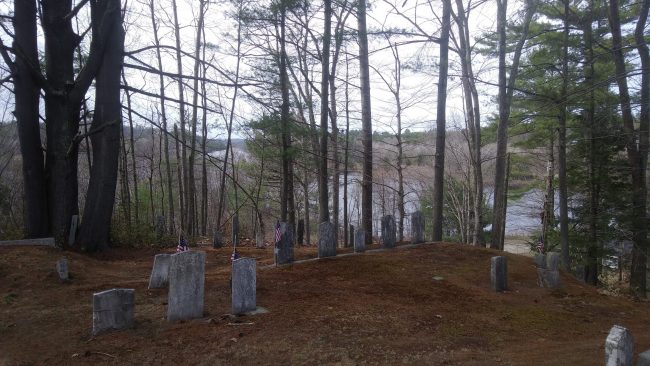
After college, my husband and I bought a small place in Central Maine. The date of the deed claimed that the house was built in 1920, but the saw marks on the wood in the basement led me to believe that the building was older. I put the idea of researching the house in the back of my mind – and life got busy. Kids, chickens, gardens, fox attacks, and all sorts of adventures kept me from finding the time to dig back into the history of our house.

It wasn’t until we went to expand one of the gardens that I thought about it again – the number of bricks that the tiller was kicking up had me scratching me head. I began tracing back the deed to the house. As the list of names and dates grew longer, I started thinking about the genealogy of place, the people who have called a building home and the history it has seen, and also began researching the names of the people who had lived here before us. It didn’t take long to piece together rough sketches of the stories of these people, but perhaps more importantly, it didn’t take long to realize that my intuition was right: the date on our deed was wrong. To make a long story short, our house was built for a spinster when her father died and sits in the middle of an old brickyard.

No wonder we harvest more bricks than potatoes.

The build date of the house, found through hours of deed, census, and tax map research, is around 1886. That’s a fair shade earlier than the 1920 written on our deed.

In retelling my adventures in hunting down my home’s history to others, a thought occurred to me: I knew more about my house’s genealogy than I did my own.

It was time to get to work tracing my own roots. I knew my paternal family was French. I knew my maternal grandfather’s family was from Nova Scotia. I knew my maternal grandmother – a Wing before marriage – was a descendant of a family that had their own nation-wide family reunions. What I didn’t know was….well….a lot. Who were the Vaughns in Nova Scotia? Where did my father’s side come from? Why did any of them end up where they did?

These were the normal questions that anyone searching for their family comes across. The answers have led to me dig deep into Acadia’s deportation, Loyalist land allotments, the history of the Rumford paper mill, Francophone harassment in Maine, heartbreaking stories of death, and inspiring tales of beating the odds. Each answer brought more questions.

Since then, I’ve worked to slowly piece through what stories are known to find the stories still buried. It’s been an arduous journey as not many in my family are willing to talk about the past. Those who might have been a bit more at ease to do such have passed to the other side of the veil. This being the case, I’ve set to finding out as much about my genealogy as I can, and in some way feel as though I’m rebuilding the foundations of my family brick by brick, regardless to how they were originally kicked aside.


This blog post is done in part for Amy Johnson Crow’s #52Ancestors challenge. To learn more, visit https://www.amyjohnsoncrow.com/52-ancestors-in-52-weeks/.

Tips and Tricks

Virtual Cemeteries

Websites such as Findagrave, Billiongraves, and CanadianHeadstones have allowed for relatives far off to see photos of the headstones of those who have passed. While leaving virtual flowers has never really blossomed into a routine, answering photos requests for others has, and so has building virtual cemeteries.

Those new to the realm of headstone digitization may be scratching their head asking, “What the hell is a virtual cemetery?” The easy answer is this: virtual cemeteries are bookmarks of where friends and family are buried. (Some people even create virtual cemeteries for celebrities that have passed or just interesting stones they find in their ventures.) Findagrave even allows you to create memorials in these virtual cemeteries for pets who have passed, a wonderful touch for those who were unable to buy their pet in a location that can be visited.

As a genealogist, I’ve created virtual cemeteries for others while doing research (only if applicable to the question they want me to answer). I then give them the link to the virtual cemetery and a certain time period in which they can copy the information over. By doing this, I give them something a bit more fleshed out than just a list of where their family is buried.

For my own personal use, virtual cemeteries hold two purposes:

Virtual cemeteries can prove a wonderful tool when visiting memorials, especially if you have plenty of family in one spot. You don’t need the spirits gossiping about why you forgot to visit your great aunt, but spent an hour with your drunk of an uncle the next plot over.
  1. To provide an easy list of who I’m visiting. – When I do get the chance to visit a cemetery where family is buried, life becomes much easier if I can simply open up the link to the virtual cemetery. Remembering the four family members buried in Saint Bruno Cemetery is one thing, but the 10 in Saint John’s? Or the 16 in Newman Cemetery? That gets a bit trickier.


  2. To help give historical societies and cemetery commissions approval for cleaning and resetting stones in my family. – Over the years headstones collect growth, become discolored, topple over, or are slowly eaten up by the earth. In many states it is illegal to clean stones without getting permission from the family or the sexton of the cemetery. As much as I would love to be able to visit and tend all of my family’s stones, that’s an insurmountable task. When I hear of historical societies or cemetery commissions planning work sessions, I always check my virtual cemetery listing to see if I’m related to anyone in the cemetery so I can give proper permission for stone maintenance, and even provide those doing the work with a list.
My 3rd great-grandmother’s stone looks like it could use a little love. If I hear of someone working in Greenwood Cemetery before I get there, I’ll make sure they check on her stone. (Photo Credit: Gail Kelly)

While virtual cemeteries may seem a bit hokey to some, they can most certainly serve a purpose. From providing a list of who to “call on,” to making a virtual graveyard of interesting celebrities, everyone can find a reason to make these little memorial oasis.

Hiring a Professional

What To Know About Professional Genealogists

Anytime you hire someone, it helps to know a little bit about their field of occupation. Here are some of the key things to keep in mind about professional genealogists when working with one.

  • We use the same records as you do and then some. Professional genealogists also make use of Ancestry, FamilySearch, My Heritage, FindaGrave, and other online resources. Despite when some believe, professional genealogists do not have access to special archives designed only for professionals. What we do have is extensive knowledge of how to use the catalogs these systems have, where to find obtuse information, and the love for digging through virtual tomes that aren’t indexed digitally.
  • Quality work is time consuming. In order to make sure that the right documents are cited, the correct family tree climbed, and the questions answered as fully as possible, copious amounts of time is spent doing genealogical research. Some days the document that is being hunted might be on page three of a digital book, other times it may be page 400, written by hand, and in French, not to mention poorly photocopied. In order to make sure a genealogical question is answered in a manner that fits the genealogical standard, a professional genealogist must be thorough — which takes time.
  • Specific objectives help us do our work. Simply asking a professional genealogist to build your family tree is a very vague task; asking them to find evidence of the marriage between your sixth-great-grand parents on your maternal side with the last name or Arsenault is fantastically specific. Ever individual researched takes up time. If you want a professional genealogist who can help you in a timely manner, you objective should be specific. If it needs to be broader, that’s something to be decided on when talking over the scope of the project.
  • Your past research helps us do our job. Any research you have done is important to share with whoever you hire to do professional genealogical work. This is not a time to “test” the professional genealogist by seeing if they find the same documents — for one, that’s just rude, and for two, you’re wasting your money and the genealogist’s time. Being forthcoming and honest about the research you have done, providing copies of any documents and notes you may have, and being receptive to feedback about what you have collected is a wonderful way to ensure a firm working relationship with the professional genealogist you hire.
  • We love to hear stories, but we won’t use them in our research. Documentation and facts that can be presented trump family stories every time. Yes, you were told that your fifth-great-grandmother Winnie was a Cherokee Princess, but if the documentation isn’t there…..it’s just a story. Be prepared for professional genealogists to hold a firm line on that.
  • We are real people! While it would be fantastic if professional genealogists had a magic wand that could make documents suddenly fly off the shelves and into our hands, the reality is that such a thing can’t happen. Professional genealogists may spend hours looking for a document online, calling archives, visiting libraries, only to have to form the conclusion that the document doesn’t exist. Other times, answering even the most specific objective may take far longer than one block of time. Professional genealogists will always do their best to gather the most information possible during the time requested.
Hiring a Professional

Why Hire a Professional Genealogist?

Ancestry, FamilySearch, Heritage Tree, and WikiGenes all exist to help make genealogical research easier for the do-it-yourselfer. There are also countless social media groups filled with “angels” who will do the work pro-bono. Some surnames are even lucky enough to come with genealogical website already created online – it’s like you’ve struck gold!

Why hire a professional genealogist? What can a professional genealogist do for you that you can’t do for yourself?

Let’s take a look:

  • TIME. Genealogy is a very time intensive hobby. While filling out your family tree can seem easy, it’s more than just clicking on hints and copy and paste. In order to have an authentic family tree, with well documented research, primary sources are a must! Primary sources are the documents that prove the information in your tree (such as birth place and time, death and burial locations, marriage certificates, military history, etc.). While some of these documents are indexed online, many aren’t, and it can take hours combing through to find what is your ancestor’s breadcrumb trail. Professional genealogists know the most efficient methods to gather those documents in a timely manner.
  • BRICK WALLS. When researching your family, there can be a series of brick walls that come up – areas where you just can’t get through to the other side to continue on. While many documents are online – some indexed and some not – there still exist many that are only kept in paper form. This is when paying a genealogist in the area where your brick wall is located may come in handy. Professional genealogists can do the “boots on the ground” work, digging through libraries, historical societies, and town offices.

  • LOCAL KNOWLEDGE. If your family tree takes you to an area you’ve never heard of – and in many cases it will – it might make you wonder what life was like in that area. Finding genealogists from specific locations can be akin to finding a living historian. Many have spent copious hours researching their home towns and state. Professional genealogists can help give others a more well rounded understanding of what life was like in the area and help provide more depth to family history and culture.

  • LINEAGE SOCIETY APPLICATIONS. There is no cookie-cutter application when it comes to lineage societies. Each has their own application and specific requirements. Professional genealogists can help track down the documentation needed for these applications in a timely manner.

  • AN EXTRA SET OF EYES. Remember doing assignments in grade school? You’d pass them in, fully sure of yourself that you got everything right, that nothing was missing, only to get it returned with a lower grade than your expected. “If only I had another set of eyes to look at this.” Genealogy is the same way. We look over the same documents, census records, town reports, over and over — and sometimes we miss things. Hiring a professional genealogist to look over your own notes and records, to see if there’s something you missed, is akin to being an author and hiring an editor. You might not think it’s necessary, but you’d surprised at what you could be missing.